

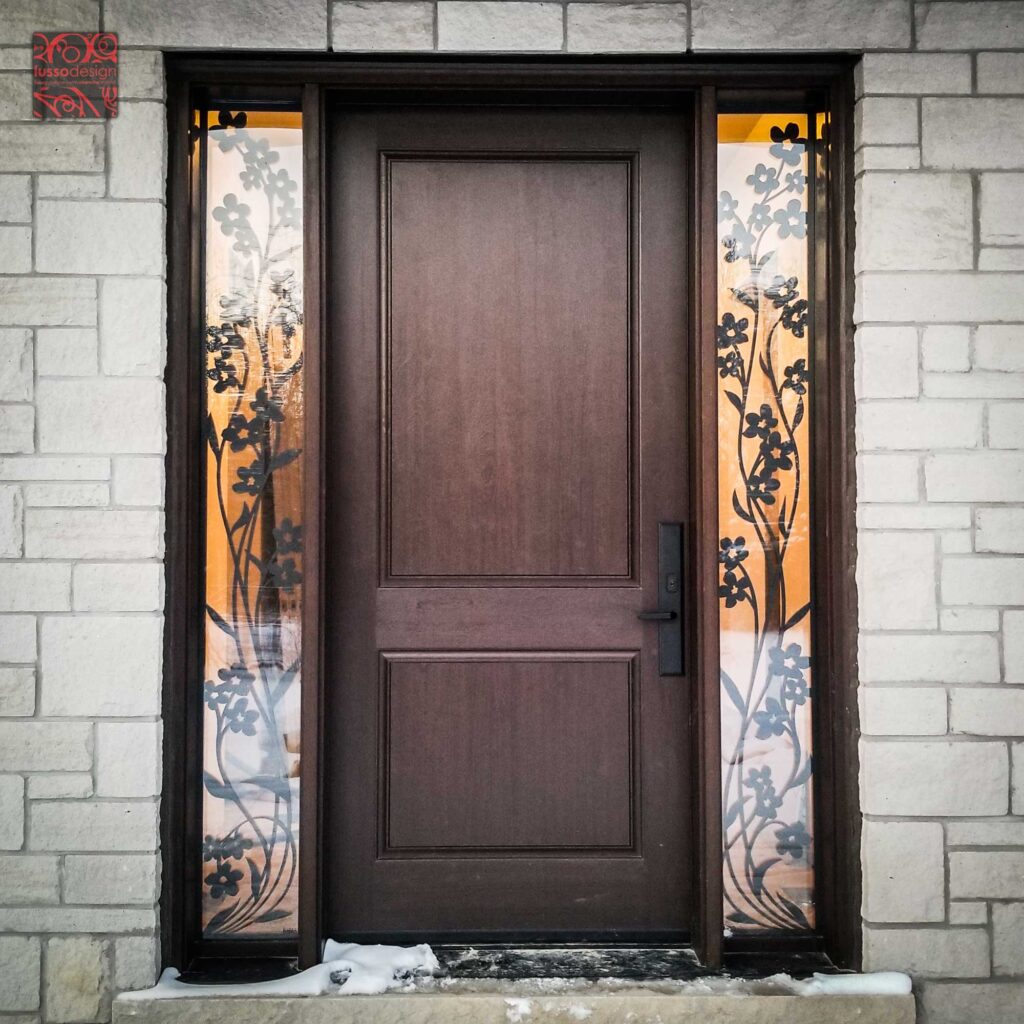
Oversized single doors — like this 42″ wide by 96″ tall beast — have become one of the hottest trends in modern home design over the past five years. And I absolutely love them.
However, designing one isn’t as simple as clicking “larger size” on an order form. Especially when it comes to fiberglass doors, where style options are limited by what manufacturers actually offer. Why? Because making a mold (or “die”) to press the skin of a fiberglass door this size is a major investment — and not many manufacturers are willing to gamble on niche demand.
Unlike wood doors, where every component is made from scratch and nearly every panel style is possible, fiberglass doors are limited to whatever pre-designed skins exist in the catalog. So, your creative options are trimmed down quite a bit… unless you find workarounds.
Modern Engraved Styles vs. Traditional Designs
If you’re going modern, there’s some flexibility. You can do custom CNC engraving, or select from a growing library of sleek linear designs that work really well with contemporary homes.
But if you’re after a more transitional or classic look, you’re mostly stuck with the tried-and-true 2-panel layout. It’s timeless — yes — but not exactly what you’d call “bold.” And in custom projects, bold is often what the client wants.
So How Do You Make a Fiberglass Door Unique?
You customize everything around the door. In this project, we went all-in on the sidelights. The client had a vision — a custom metal grille inspired by geometric patterns. I took their sketches and turned them into a full-scale CNC-ready blueprint for the metalwork.
These grilles were then sandwiched between two panes of glass to create the sidelites — a subtle but powerful way to bring art into a functional component of the entry system. It’s not just a sidelite anymore. It’s a conversation piece.
You can scroll to the last two photos in the original IG post to see the metalwork drafts that became the final design.
Final Thoughts
When working with size constraints and material limitations, creativity becomes even more important. Whether it’s rethinking how sidelites are used, integrating unique hardware, or working closely with clients to turn their sketches into buildable concepts — this kind of project reminds me why I love what I do.
Can’t wait for the next one.