

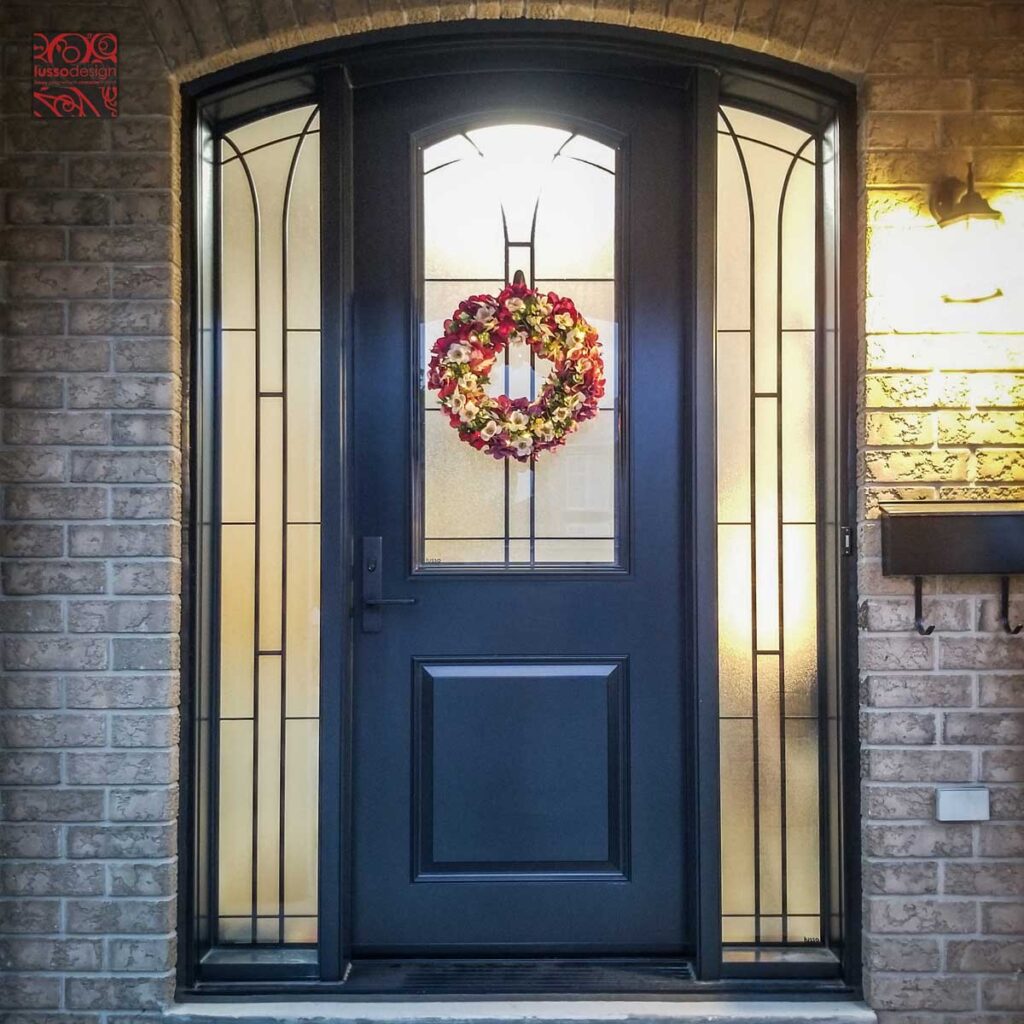
As I go through the thousands of project photos on my phone, I occasionally come across a door that somehow never made it onto the page.
This curved entry system, installed back in 2021, was one of those projects.
And it definitely deserved to be shared.
Transforming the Original Entry
Like many of our favorite projects, the inspiration came from the client.
The home originally had a double door with a curved transom, but together we decided to take the design in a different direction. Instead of replacing it with another double door, we installed an oversized 8-foot entry door, eliminating the transom altogether and extending the door to fill the opening.
The result is a much taller, cleaner entrance that immediately becomes the focal point of the home.
Curves Make Everything More Difficult
In a recent post, I talked about how curved door systems add another level of complexity to both manufacturing and installation.
This project introduced another challenge.
Not only did the glass itself have to follow the curve of the opening, but the decorative metal design inside the glass also had to match that same radius perfectly.
Unlike straight-line patterns that can simply be resized, curved designs need to be completely redrawn so every line follows the geometry naturally.
It’s one of those details that most people never notice consciously—but if it’s wrong, the entire door feels off.
Turning Decorative Glass into Metalwork
The decorative pattern itself started as inspiration from a contemporary beveled glass design.
Instead of recreating it in glass, we transformed the concept into quarter-inch steel metalwork, positioned between the insulated glass panes.
The pattern is relatively simple, but that’s exactly why it works.
The clean geometry complements the curved opening instead of competing with it, allowing the overall shape of the door to remain the star of the design.
Finding the Right Balance
One of the biggest challenges with custom doors is knowing when to stop adding details.
It’s easy to make a design more complicated.
It’s much harder to make it feel elegant.
With this project, the goal was to let every curved element—from the door itself to the glass and the metalwork—flow together naturally. The design needed enough detail to feel interesting, but not so much that it overwhelmed the architecture.
I think we found that balance.
Looking Ahead
Curved door systems will probably never become everyday projects. They’re more demanding to design, more difficult to manufacture, and significantly more challenging to install.
But they’re also some of the most rewarding projects to complete.
Every one teaches us something new, and every one pushes us to improve our craft.
I’m definitely looking forward to creating more curved entry systems in the future.