

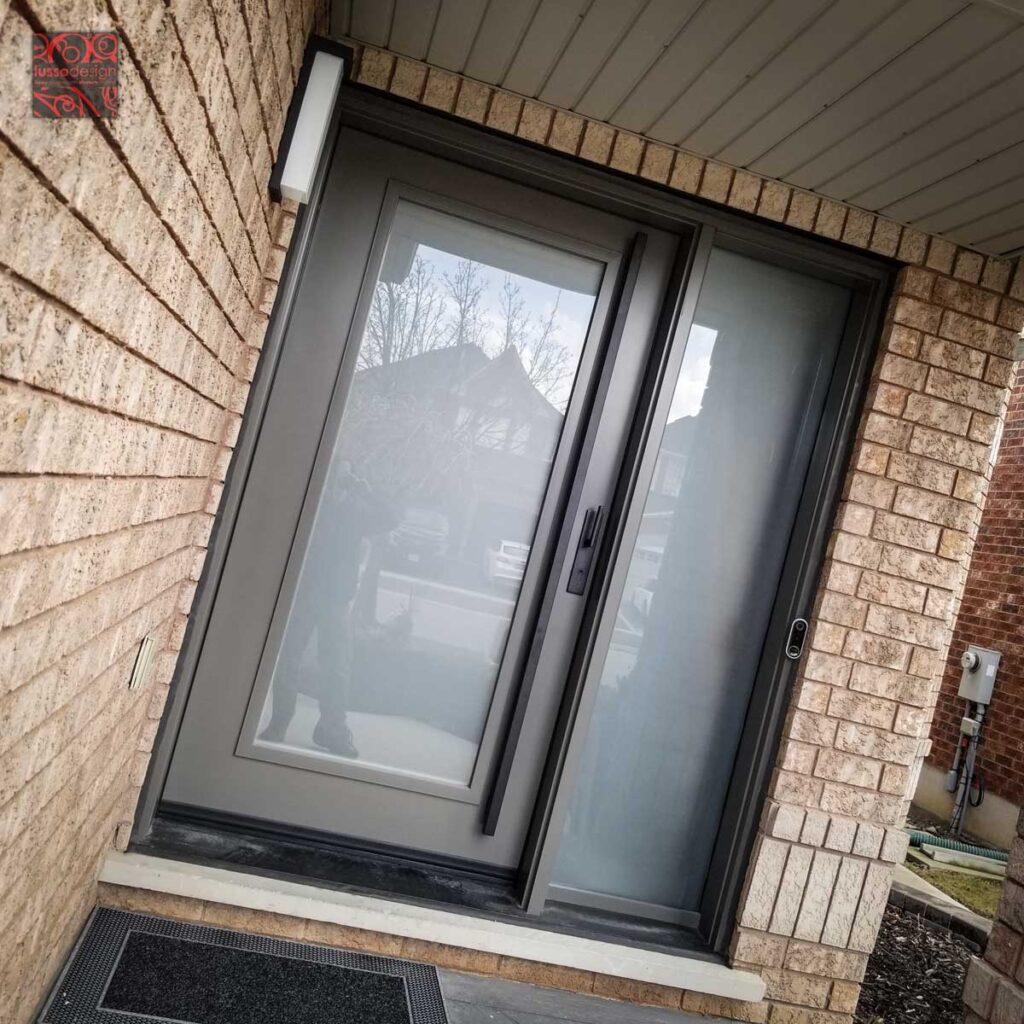
If you saw my stories, you probably noticed a T-bar lever set that we currently use as an addition to a cylinder-operated multipoint lock, which is a very common setup with modern pull bar doors.
This post is about the original solution to one very real issue with pull bar hardware: accidentally locking yourself out.
The Lockout Problem with Pull Bar Hardware
Over the past five years or so, modern front doors with pull bar hardware have become one of the biggest trends in the industry. The look is clean, minimal, and contemporary—which is exactly why so many clients love it.
But it’s also a perfect example of aesthetics sometimes working against functionality.
If you want the cleanest possible look, the only visible lock hardware is usually the cylinder. That means the door mechanism is operated by turning the key. It looks great, but there’s one obvious downside: if you leave the house without a key and shut the door behind you, you can lock yourself out.
The Vertical Lever Set Solution
The vertical lever set was one of the first practical solutions to this problem.
It’s essentially a lever set positioned vertically so that it lines up visually with the pull bar. That way, it still follows the overall design language of the door and doesn’t look like an afterthought.
Compared to a deadbolt-only setup, it has a bit more visual presence, but it still works very nicely with the pull bar aesthetic. More importantly, it gives you a way to operate the door from the exterior without needing a key every single time.
Balancing Clean Design and Daily Use
This is one of those details that matters a lot once you actually live with the door.
A door can look amazing in photos, but it still needs to function properly every day. The goal is always to find that balance between clean modern design and practical usability.
Since then, we’ve developed and used quite a few other hardware configurations and workarounds for pull bar doors, and I’ll make sure to post a few of those variations later on.
For now, this vertical lever setup remains a great example of how one small hardware decision can make a modern door much more practical.