

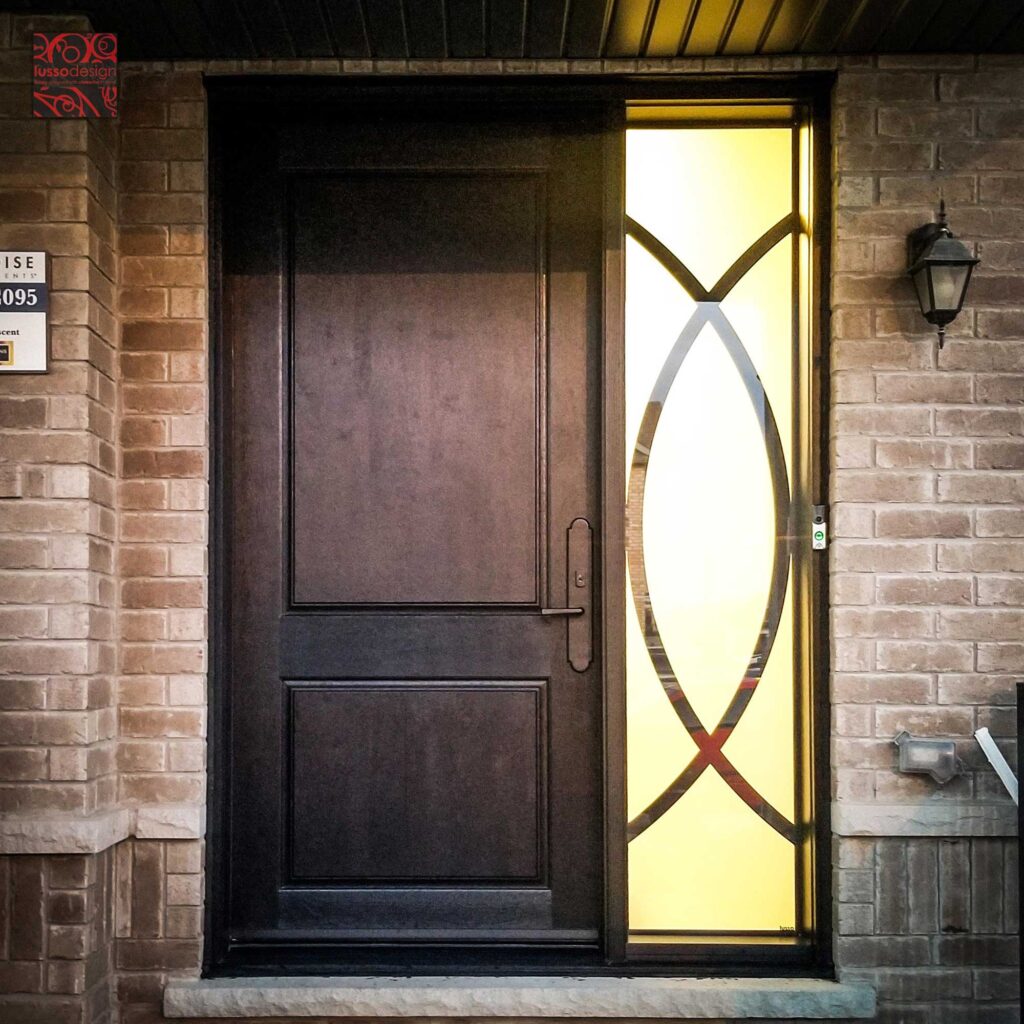
It’s not always about perfect symmetry. In fact, some of the most eye-catching door systems we install are the ones that break from traditional balance. This project is a great example—a single entry door paired with one oversized sidelight instead of two.
This setup is often seen in more modern fiberglass door systems, but here, we applied it within a transitional style context—and it worked beautifully.
Why Transitional Style Just Works
Transitional front doors have become increasingly popular because they bridge the gap between classic and modern. They’re ideal for many subdivision homes that weren’t originally designed to accommodate ultra-modern updates. Modern lines and minimal features can sometimes clash with the architectural language of these homes, but transitional design keeps things fresh without feeling out of place.
This particular door uses a classic two-panel layout, which is one of the most versatile door styles available. Depending on the finish, texture, hardware, and glass inserts, this same panel layout can look either distinctly traditional, sleek and modern, or something in between.
That’s the beauty of transitional design—it adapts.
One Sidelight Instead of Two
The most visually striking aspect of this project is the oversized sidelight placed next to a single door slab. This kind of asymmetry might not be the default choice, but it’s extremely effective when done with intention. The sidelight here not only opens up the entry visually but also brings in significantly more natural light than a standard vertical insert.
And here’s a fun detail: the glass insert pattern from the door was used for the sidelight as well. Technically, the sidelight is actually larger than most typical door inserts, so we didn’t have to do much redesign—just carried over the geometry to maintain a cohesive look.
Final Trim Touches
Getting the interior trim dialed in on this one was a bit of a challenge—fitting around asymmetrical elements always adds a layer of complexity—but it came out clean and well-balanced.
This project is proof that asymmetrical designs, when approached thoughtfully, can offer a more dynamic and contemporary look without abandoning the architectural harmony of the home.